When Is Your Child Ready for a Two-Wheeled Scooter?
Moving from a three-wheeled scooter to a two-wheeled one is a big milestone. It usually pops up around birthdays or Christmas. You’re hoping for excitement, not wobbling panic.
Here’s how to tell if it’s the right time.

1. Check the Handlebar Height
This is the simplest test.
What you want:
• Handlebars around tummy button height
• Relaxed arms
• Upright posture
Red flag:
If your child's hands sit noticeably low and they look hunched, they’ve likely outgrown the scooter.
Too tall = time to consider upgrading.
2. Look at Their Confidence
Confidence beats age every time.
Strong readiness signs:
• Smooth, steady riding
• Easy turning and manoeuvring
• Playful behaviour
• Attempting small tricks or hops
If they still:
• Wobble often
• Ride very cautiously
• Avoid speed or turns
…they may need more time on three wheels. No drama. No rush.

3. Balance Is the Key Skill
A two-wheeled scooter needs genuine balance. A very reliable clue? They ride a bike without stabilisers
That usually means:
• Balance is there
• Steering control is developed
• Confidence is solid
Not mandatory, but a great indicator.
Three Wheels vs Two Wheels
| Feature | Three-Wheeled Scooter | Two-Wheeled Scooter |
| Stability | Very Stable | Requires Balance |
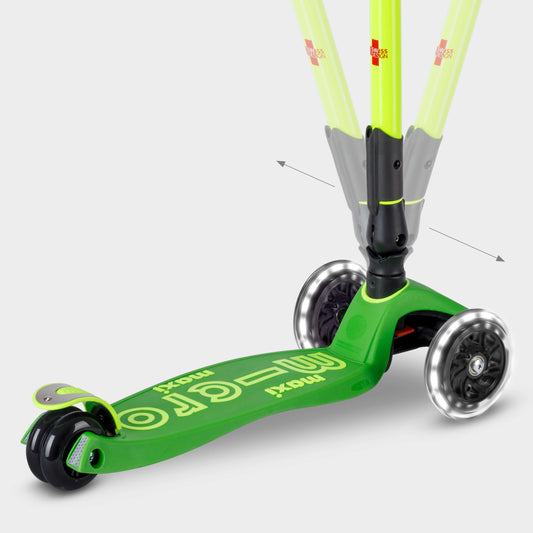
| Steering | Lean-to-Steer | Turn-to-Steer |
| Learning Curve | Gentle | Slight Adjustment |
| Best For | Beginners/Younger Riders | Confident Riders |
Three wheels build early coordination. Two wheels sharpen balance and precision.
Why Many Families Choose the Micro Sprite
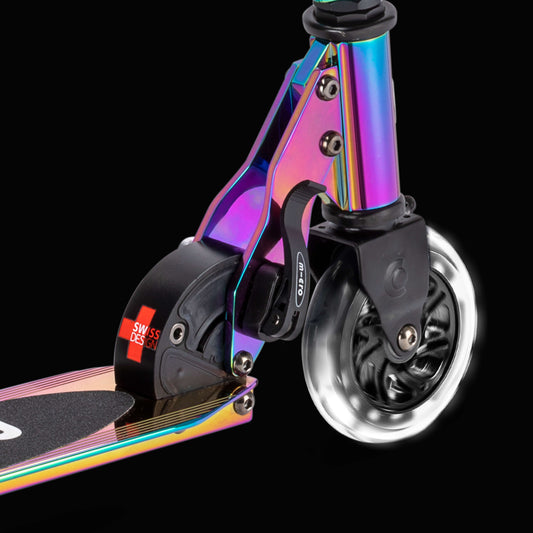
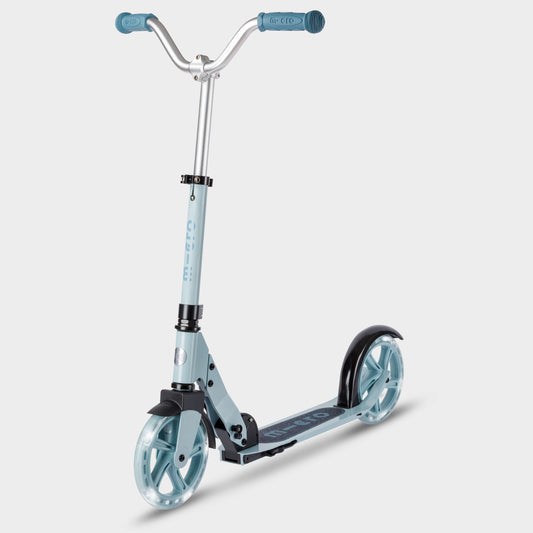
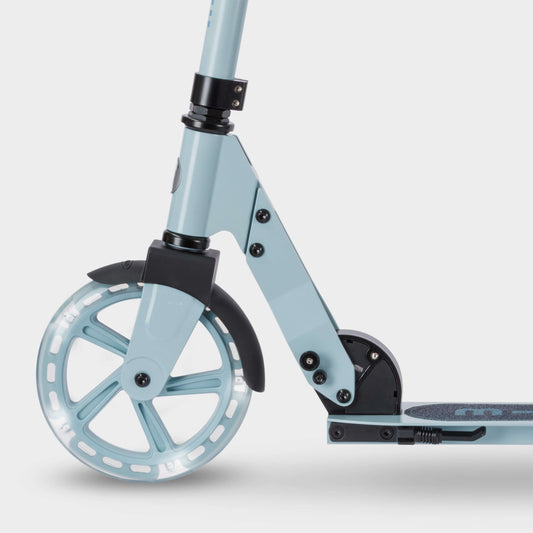
The Micro Sprite is a popular next step.
Why parents like it:
• Lightweight
• Folds quickly
• Easy to carry
• Compact storage
Why kids like it:
• Feels fast
• Feels grown-up
• Smooth steering
If space is tight at home, this one makes life easier.

Bottom Line
Your child is likely ready if:
✔ Handlebars feel too low
✔ Riding looks confident
✔ Balance seems solid
✔ Bike riding is mastered (bonus)
If not? That’s normal. Confidence develops fast at this stage.
FAQ: Two-Wheeled Scooters
At what age should a child switch to a two-wheeled scooter?
There’s no fixed age. Many children transition between ages 5 and 8, but readiness depends on height, balance, and confidence.
Is a two-wheeled scooter harder to ride?
Slightly. It requires balance and uses turn-to-steer instead of lean-to-steer. Most confident riders adjust quickly.
Does my child need to ride a bike first?
No, but it helps. Riding without stabilisers usually signals strong balance skills.
What if my child struggles after switching?
Completely normal.
Try:
• Smooth, flat surfaces
• Short practice sessions
• Encouragement over pressure
Most children adapt quickly.