Not all balance bikes are the same. And when your rider is only two, those differences really matter.
It can be tempting to buy a bigger balance bike for your child to grow into, but bigger isn't necessarily better. A balance bike should feel comfortable and manageable now, so your child can control it confidently.
So how do you choose?
Start with three things: weight, size and how confidently your child can control the bike.
If you're deciding between the Micro Balance Bike Lite and Micro Balance Bike Ultra, here's how the two compare.

What Should You Look for When Buying a Balance Bike?
The best balance bike isn't necessarily the biggest or the one with the most features.
It's the bike your child can comfortably:
- Hold upright
- Push along
- Manoeuvre
- Steer
- Stop
- Pick up when needed
A balance bike that's too large or heavy can make learning harder, especially for younger or smaller children.
Choosing a bike that fits your child now helps them focus on what matters: balance, steering, and independent movement.

1. Micro Balance Bike Lite: Lightweight and Easy to Control
For younger or smaller riders, weight can make a huge difference.
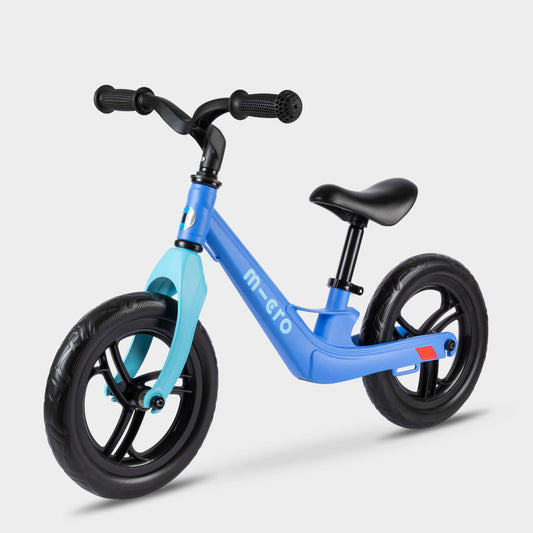
The Micro Balance Bike Lite weighs just 2.6 kg, making it exceptionally lightweight and easy for little riders to manoeuvre.
Its lightweight magnesium frame means children have less weight to control as they learn.
Who Is the Micro Balance Bike Lite Best For?
The Micro Balance Bike Lite is particularly well suited to:
- Younger balance bike riders
- More petite children
- Children trying a balance bike for the first time
- Riders who benefit from a lightweight bike
- Families who regularly need to carry the bike
Because the Micro Balance Bike Lite weighs just 2.6 kg, it's also much easier for parents to pick up and carry when those little legs inevitably decide they've finished riding.
Why Does Balance Bike Weight Matter?
Imagine trying to learn to ride a bike that's disproportionately heavy compared with your own body weight.
That's effectively what can happen when a small child rides a heavy balance bike.
A lighter bike can make it easier for children to:
- Move off independently
- Change direction
- Regain control
- Manoeuvre around obstacles
- Handle the bike themselves
For a two-year-old learning the basics, those differences can matter.

2. Micro Balance Bike Ultra: A Bigger-Bike Feel
If your child is ready for something that feels closer to their first traditional bike, consider the Micro Balance Bike Ultra.
The Micro Balance Bike Ultra features larger 12-inch puncture-proof wheels, giving it a more substantial feel and helping it ride smoothly across everyday terrain.
Its metallic finish also gives the bike a more grown-up look that older or more confident little riders may love.
Larger 12-Inch Wheels
Wheel size can affect how a balance bike feels to ride.
The Micro Balance Bike Ultra's larger 12-inch wheels help it roll smoothly across different surfaces, making it a great option for children ready for bigger adventures.
The puncture-proof design also means parents don't need to worry about tyre pressure or punctures.
Up to 50 kg Rider Weight
The Micro Balance Bike Ultra supports riders up to 50 kg, giving it a generous weight capacity.
Combined with its larger wheels and more substantial design, it provides an option for children who want the feel of a bigger bike while still developing their balance without pedals.
Micro Balance Bike Lite vs Micro Balance Bike Ultra: What's the Difference?
|
Feature |
Micro Balance Bike Lite |
Micro Balance Bike Ultra |
|
Best for |
Younger or smaller riders |
Riders wanting a bigger-bike feel |
|
Bike weight |
2.6 kg |
More substantial design |
|
Frame |
Lightweight magnesium |
Check product specification |
|
Wheels |
Check product specification |
12-inch puncture-proof wheels |
|
Manoeuvrability |
Particularly lightweight and easy to handle |
Designed for smooth, confident riding |
|
Maximum rider weight |
Check product specification |
Up to 50 kg |
|
Look and feel |
Lightweight, streamlined design |
Metallic, more grown-up bike styling |
Which Micro Balance Bike Should I Choose?
A simple way to decide is to consider your child's size, confidence, and riding experience.
Choose the Micro Balance Bike Lite if...
Your child is younger, smaller or trying a balance bike for the first time, and you want to prioritise low weight and easy manoeuvrability.
Choose the Micro Balance Bike Ultra if...
Your child wants something that feels closer to a traditional bike, and you'd prefer larger 12-inch wheels, a higher rider weight capacity and a more substantial ride.
The important thing isn't buying the balance bike they'll eventually grow into.
It's choosing one they can confidently control now.

Why Is the Right Size Balance Bike Important?
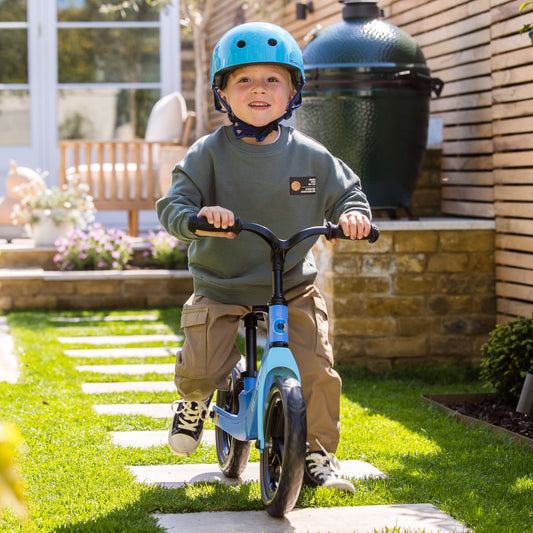
A correctly sized balance bike lets a child place their feet comfortably on the ground while sitting on the saddle.
This matters because children use their feet to propel themselves, slow down and stabilise the bike.
If a bike is too large, they may struggle to reach the ground properly. If it's unnecessarily heavy, they may find steering and manoeuvring more difficult.
That's why child height and inside leg measurement can be more useful than age alone when choosing a balance bike.
Balance Bike Features at a Glance
|
What to Consider |
Why It Matters |
|
Bike weight |
Affects how easily a child can manoeuvre it |
|
Saddle height |
Determines whether they can comfortably reach the ground |
|
Child's inside leg |
Helps establish the correct fit |
|
Wheel size |
Influences ride feel and handling |
|
Rider confidence |
Helps determine whether lightweight or more substantial is appropriate |
|
Adjustability |
Allows the bike to accommodate growth |
Frequently Asked Questions
What is the best balance bike for a 2-year-old?
The best balance bike for a two-year-old is one they can comfortably control and manoeuvre. Consider the child's height and inside leg measurement, as well as their age. A lightweight model such as the 2.6 kg Micro Balance Bike Lite may suit younger or smaller riders particularly well.
Is a lighter balance bike better for toddlers?
A lightweight balance bike can be easier for a small child to move, steer and manoeuvre. The child's size and strength matter, so the lightest suitable bike can often make learning easier for younger riders.
Should I buy a bigger balance bike for my child to grow into?
Avoid choosing a balance bike that's currently too large simply because your child will eventually grow into it. Your child should be able to sit comfortably and reach the ground securely with their feet so they can control the bike themselves.
What is the difference between the Micro Balance Bike Lite and Micro Balance Bike Ultra?
The Micro Balance Bike Lite prioritises low weight and manoeuvrability, weighing just 2.6 kg with a magnesium frame. The Micro Balance Bike Ultra offers a more substantial feel, with larger 12-inch puncture-proof wheels and a maximum rider weight of 50 kg.
Are puncture-proof balance bike wheels good?
Puncture-proof wheels remove the need to inflate tyres and eliminate the inconvenience of punctures. They're particularly practical for everyday family adventures.
How do I know what size balance bike my child needs?
Check the manufacturer's saddle height against your child's inside leg measurement. Your child should be able to sit comfortably on the saddle and place their feet securely on the ground.
Do balance bikes help children learn to ride a bike?
Balance bikes let children practise balancing, steering, and controlling a bike without coordinating pedalling at the same time. These skills can help prepare children for the transition to a pedal bike.